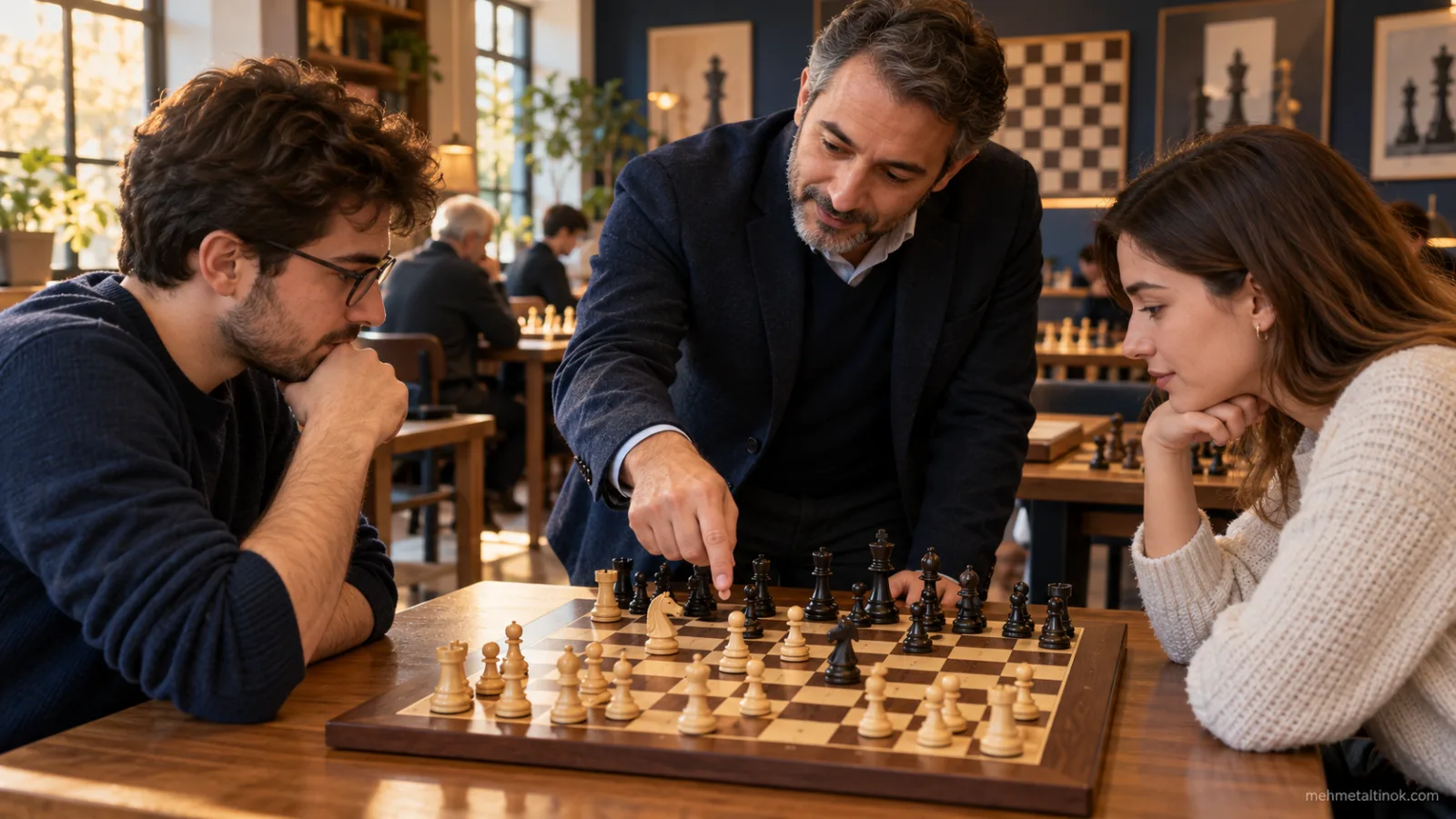
A good chess opening is not simply a sequence of memorized moves played in the correct order. Its real purpose is to bring your pieces into the game, influence the center, protect your king and reach the middlegame with a clear and playable position.
Beginners often try to memorize long opening variations. The problem is that this knowledge may become useless as soon as an opponent plays an unexpected move. Learning the principles behind the moves gives you a much stronger foundation because it helps you make sensible decisions in unfamiliar positions.
In this guide, we will examine 10 essential chess opening principles, explain why they matter and highlight the situations in which an exception may be justified.
Why are chess opening principles important?
At the beginning of a game, most pieces are still restricted by their own pawns. The main goal of the opening is to create a coordinated position in which as many pieces as possible can participate effectively.
By the end of a healthy opening, you will usually have achieved several things:
- You have established sufficient influence over the center.
- Your knights and bishops have reached active squares.
- Your king is reasonably safe.
- Your rooks are ready to participate in the game.
- Your position can respond to the opponent’s immediate threats.
- You have a practical plan for the middlegame.
Opening principles are guidelines rather than unbreakable laws. A tactical necessity or a direct threat may require you to depart from a general principle. What matters is understanding why you are making that decision.
1. Fight for control of the center
The central squares affect how freely your pieces can move and how quickly they can reach either side of the board. A centrally placed piece will usually control more useful squares than the same piece placed near the edge.
Advancing a central pawn early in the game can claim space and open lines for a bishop and the queen. This is one reason moves such as e4 and d4 for White, or e5 and d5 for Black, appear in so many openings.
Controlling the center does not always mean occupying it with as many pawns as possible. In some openings, players allow the opponent to build a pawn center and then attack it from a distance. The important lesson for beginners is not to let the opponent take complete control of the center without a response.
2. Develop your minor pieces early
Knights and bishops have limited influence from their starting squares. Developing them to active and secure positions increases your control of the board and helps prepare your king for castling.
Knights are usually most effective on squares close to the center where they cannot be chased away easily by enemy pawns. Bishops become more useful when they have access to open diagonals. When choosing a development move, consider not only whether the piece has left its starting square, but also what it will accomplish on its new square.
The familiar advice to develop knights before bishops can be useful because the natural squares for the knights are often easier to identify. It is not an absolute rule, however. The position may give you a good reason to develop a bishop first.
3. Avoid moving the same piece repeatedly without a reason
Every tempo matters during the opening. If you move the same piece several times while your opponent develops a different piece with each move, you may fall behind in development.
For example, after placing a knight on an active square, moving it again without a concrete purpose delays the development of another piece. A useful beginner’s habit is therefore to bring a new piece into the game whenever the position allows it.
This does not mean that you should leave a piece under attack or ignore a tactical opportunity. Moving the same piece again may be necessary if it is threatened, can win material or can create a strong forcing move. The principle is intended to prevent aimless loss of time, not to discourage necessary moves.
4. Do not delay king safety
A king left in the center can become vulnerable when central files and diagonals begin to open. In many positions, castling moves the king toward safety while bringing a rook closer to the center.
Castling relatively early is usually a sound plan for beginners, but it should not be played automatically. If the pawn structure on one side of the board has already been weakened or the opponent has directed several pieces toward that area, castling there may place the king in greater danger.
King safety also involves more than castling. Avoid unnecessary pawn moves around your king and pay attention to the lines your opponent may open in the center.
5. Avoid bringing the queen out too early
Because the queen is the most powerful piece, beginners may be tempted to use it immediately. An early queen move can become a target, however, allowing the opponent to develop less valuable pieces with tempo.
If your opponent attacks your queen while developing a knight or bishop, they improve their position while forcing you to spend another move on the queen. Repeated queen moves can leave the rest of your army undeveloped.
This principle does not mean that every early queen move is wrong. Moving the queen can be appropriate when it occupies a safe square, improves coordination, prepares to connect the rooks or responds to a concrete threat. The key is to avoid placing it where the opponent can chase it with useful development moves.
6. Connect your rooks
Once the knights and bishops have developed, the king has become safe and the queen has moved to a suitable square, the pieces between the two rooks are cleared. The rooks are then said to be connected.
Connected rooks can support each other and move more easily to open or half-open files. They are also better prepared to participate in central play. Looking at your rooks is therefore a useful way to judge whether your development is close to completion.
You do not always need to move the rooks immediately. However, if unnecessary pieces still remain between them, your opening development may not yet be complete.
7. Do not feel obliged to capture every pawn
An apparently unprotected pawn can be difficult to resist. Yet winning it may require several moves with the queen or another piece, giving the opponent time to develop and attack.
Before capturing a pawn in the opening, ask yourself:
- Will my piece be safe after the capture?
- Can my opponent attack it while developing another piece?
- Will my king remain exposed in the center?
- Is the pawn truly free, or is it part of a tactical idea?
- Is the material gain worth the loss of time and safety?
An extra pawn does not always compensate for falling behind in development. In some positions, declining the pawn and continuing to develop is the stronger decision.
8. Check your opponent’s threats after every move
Opening principles are useful only when they are combined with tactical awareness. A move that controls the center or develops a piece may look attractive, but it can still be a mistake if your opponent is attacking your queen, threatening checkmate or targeting an undefended piece.
After every opposing move, perform a brief safety check:
- What does the opponent’s last move attack?
- Has it created a new check, capture or direct threat?
- Do I have an undefended piece?
- Must I respond before continuing my development?
The best development move will often improve your position while also answering the opponent’s threat.
9. Do not launch an attack before completing development
An early attack involving only one or two pieces is often easy to defend. While responding to the threat, the defending player may develop pieces and eventually take the initiative.
A successful attack usually requires enough pieces to participate around the target. Looking for checkmate with only the queen and a bishop is risky when your king remains in the center, your rooks are inactive and your other pieces are still on their original squares.
If your opponent has made a serious tactical mistake, you should of course take advantage of it. Without a concrete opportunity, completing development and coordinating your pieces is generally more reliable than beginning a premature attack.
10. Enter the middlegame with a plan
The game does not begin to play itself once the opening moves are complete. As you enter the middlegame, you need to reassess the position and identify what it requires.
The following questions can help you form a plan:
- Which of my pieces is placed least effectively?
- Is there an open or half-open file for a rook?
- Does my opponent have a weak pawn or square?
- Which pawn move could improve my position?
- Should I play on the kingside, queenside or in the center?
- What is my opponent’s likely plan?
A plan does not always have to involve an immediate attack. Improving your worst-placed piece, restricting the opponent’s counterplay or preparing a useful pawn break may be the best course of action.
Common opening mistakes made by beginners
Opening problems often result not from one terrible move, but from several poor habits combined:
- Depending entirely on cheap traps
- Making too many pawn moves instead of developing pieces
- Attacking early with the queen and losing time
- Playing automatic moves without checking the opponent’s threats
- Opening the center while the king remains exposed
- Memorizing opening names and moves without understanding their purpose
- Collecting material before completing development
One effective way to correct these habits is to review the first 10 to 15 moves after each game. Look for unnecessary losses of tempo, pieces that entered the game too late and the moment when you secured—or failed to secure—your king.
How should beginners study chess openings?
Beginners do not need to learn dozens of openings at the same time. A basic system with White and a small number of responses to the opponent’s common first moves with Black are enough to build a practical repertoire.
Instead of focusing only on exact move orders, ask the following questions while studying:
- Which pawns are used to influence the center?
- Where are the knights and bishops normally developed?
- On which side does the king usually castle?
- What are the typical pawn breaks?
- Which piece exchanges are desirable or undesirable?
- What is the main middlegame plan?
After learning a few short variations, study annotated games played in the same opening. Complete games reveal how the opening ideas lead into middlegame plans. Analysing your own games then turns this theoretical knowledge into practical experience.
Frequently asked questions
How many moves does the opening last?
There is no fixed number of moves that defines the end of the opening. It is generally considered complete when most pieces have been developed, the kings are reasonably safe and both sides have begun carrying out middlegame plans.
Which chess openings should beginners learn?
Openings that clearly demonstrate central control, quick development and king safety are suitable for beginners. When choosing an opening, consider whether you understand the resulting positions rather than selecting it only because it is popular.
Do I need to memorize opening moves?
Some knowledge of common move orders is useful, but understanding the ideas is more important at beginner level. When an opponent departs from a memorized variation, opening principles help you find an appropriate response.
Do opening principles apply in every position?
No. They are general guidelines that help you identify sensible moves. Tactical necessities, direct threats and the specific demands of a position may justify temporarily departing from one of these principles.
Is early castling always correct?
Early castling is a safe choice in many opening positions. However, if the opponent has already built an attack on that side or the pawn structure there is seriously weakened, you should evaluate the concrete position before castling.
Conclusion
Playing the opening well begins with understanding piece coordination rather than memorizing long sequences of moves. Controlling the center, developing the minor pieces, protecting the king and avoiding unnecessary losses of time are reliable habits across many different openings.
Do not apply these 10 principles mechanically. Compare them with the specific needs of the position. As you review more of your own games, you will become better at recognizing when to follow a general principle and when a concrete tactical consideration should take priority.
If you would like to explore how chess may support different mental and social skills, you can also read our guide to the benefits of playing chess.